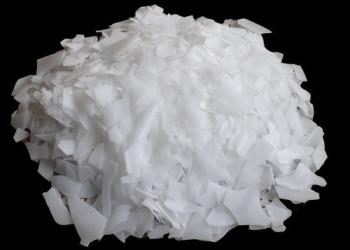
Polyethylene Wax Performance
Polyethylene Wax (PE Wax) is a low molecular weight, white, odorless polymer wax that is widely used in the plastics, PVC, masterbatches, and compounds industries due to its excellent lubricity, good thermal stability, and high compatibility. This product improves the production process, increases surface quality, and optimizes the final properties of the products.
Key Properties of PE Wax Flakes
Thermal Stability
Grades are selected by melting point and thermal behavior to maintain performance under typical processing conditions. Many industrial grades fall within a melting range of approximately 100–135°C, depending on chemistry and molecular weight.
Internal and External Lubrication
Internal lubrication can help reduce melt viscosity and improve flow
External lubrication can help reduce sticking on metal surfaces, supporting smoother extrusion and moldin
Dispersibility and De-agglomeration
Supports more uniform distribution of pigments, fillers, and additives, helping improve surface uniformity and reduce visible defects.
Compatibility by Chemistry
PE wax can be matched to system polarity and formulation requirements through:
homopolymer grades for strong lubrication and hardness in many polymer systems
oxidized grades for improved wetting and compatibility in more polar systems (including many water-based formulations)
copolymer grades for flexibility and solubility/viscosity tuning in targeted applications
Application
Textiles, asphalt, coatings, gloss agents, slip agents, printing inks, PVC industry, cable industry, hot melt adhesives, viscosity modifier
Paraffin compound, processing aid for rubber, wood-plastic composites, pigment dispersion enhancer, candles (with increased hardness and heat resistance)